## Merbau Decking: The Natural Choice
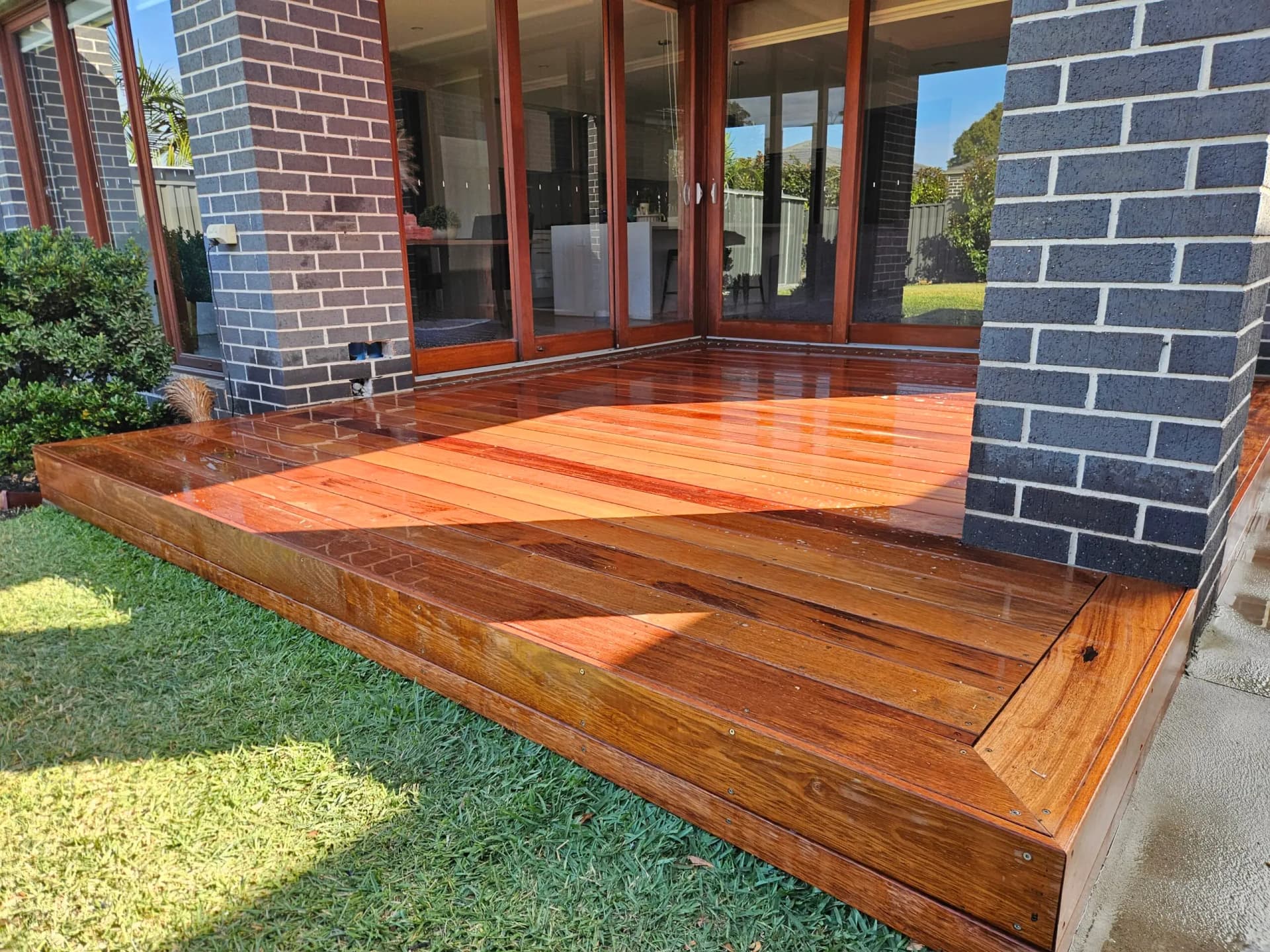
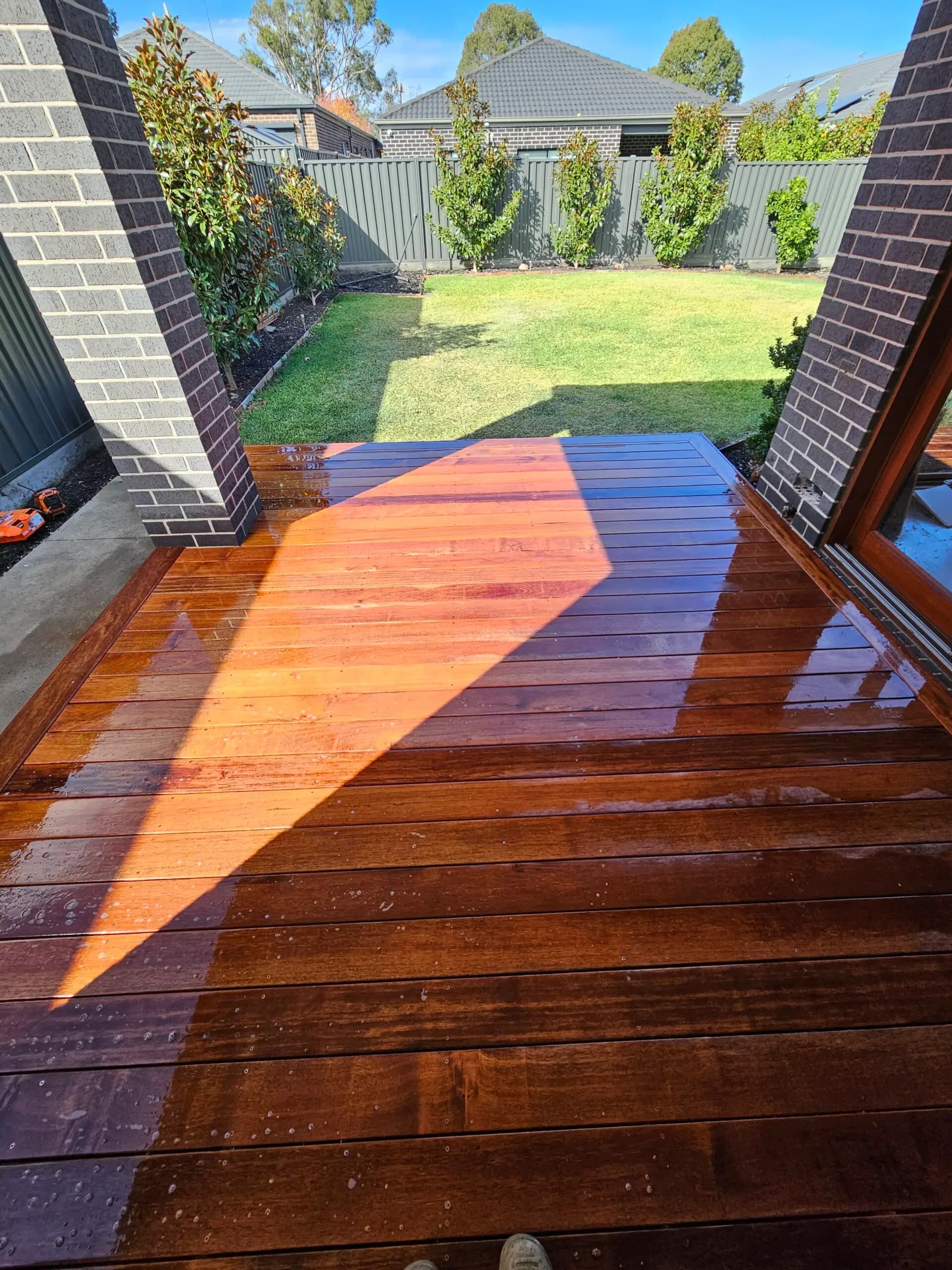
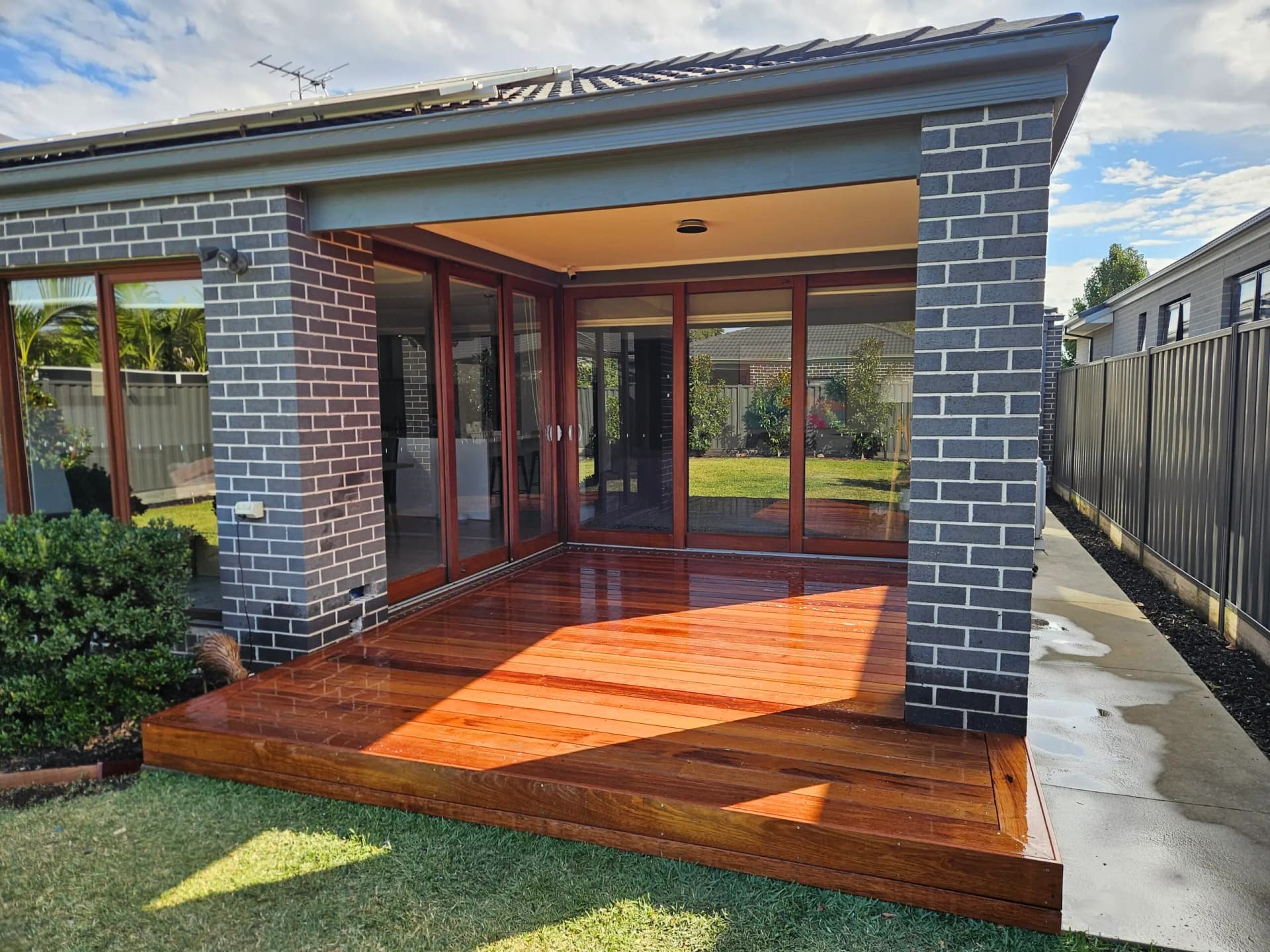
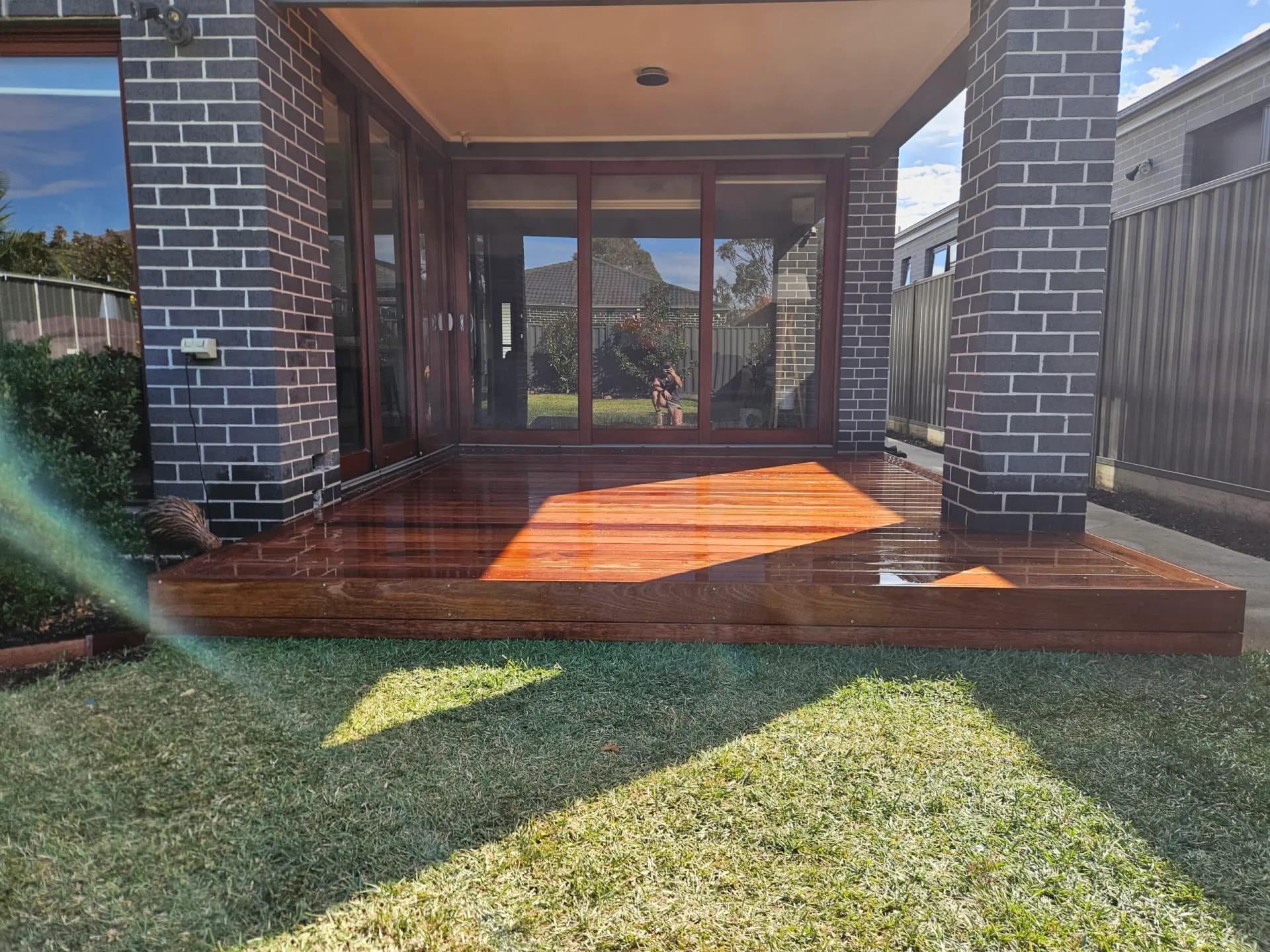
Merbau (also known as kwila) has been a popular decking timber in Melbourne for decades. It's a dense hardwood with a rich, warm tone that many homeowners love.
Pros
- Natural warmth and beauty — Merbau has a distinctive reddish-brown colour and natural grain that is hard to replicate with manufactured products
- Proven durability — As a Class 1 durability hardwood, merbau is naturally resistant to rot and insect damage
- Classic aesthetic — Suits traditional, heritage, and contemporary homes equally well
- Feels natural underfoot — The texture and temperature of real timber is a genuine difference
Cons
- Regular maintenance required — Merbau needs oiling every 6–12 months to maintain its colour and prevent greying
- Initial tannin bleed — New merbau releases tannins that can stain surrounding surfaces for the first few months
- Can splinter over time — Without regular maintenance, the surface can roughen and develop minor splinters
- Colour fading — Without UV-protective oiling, merbau will grey naturally over time
Best for
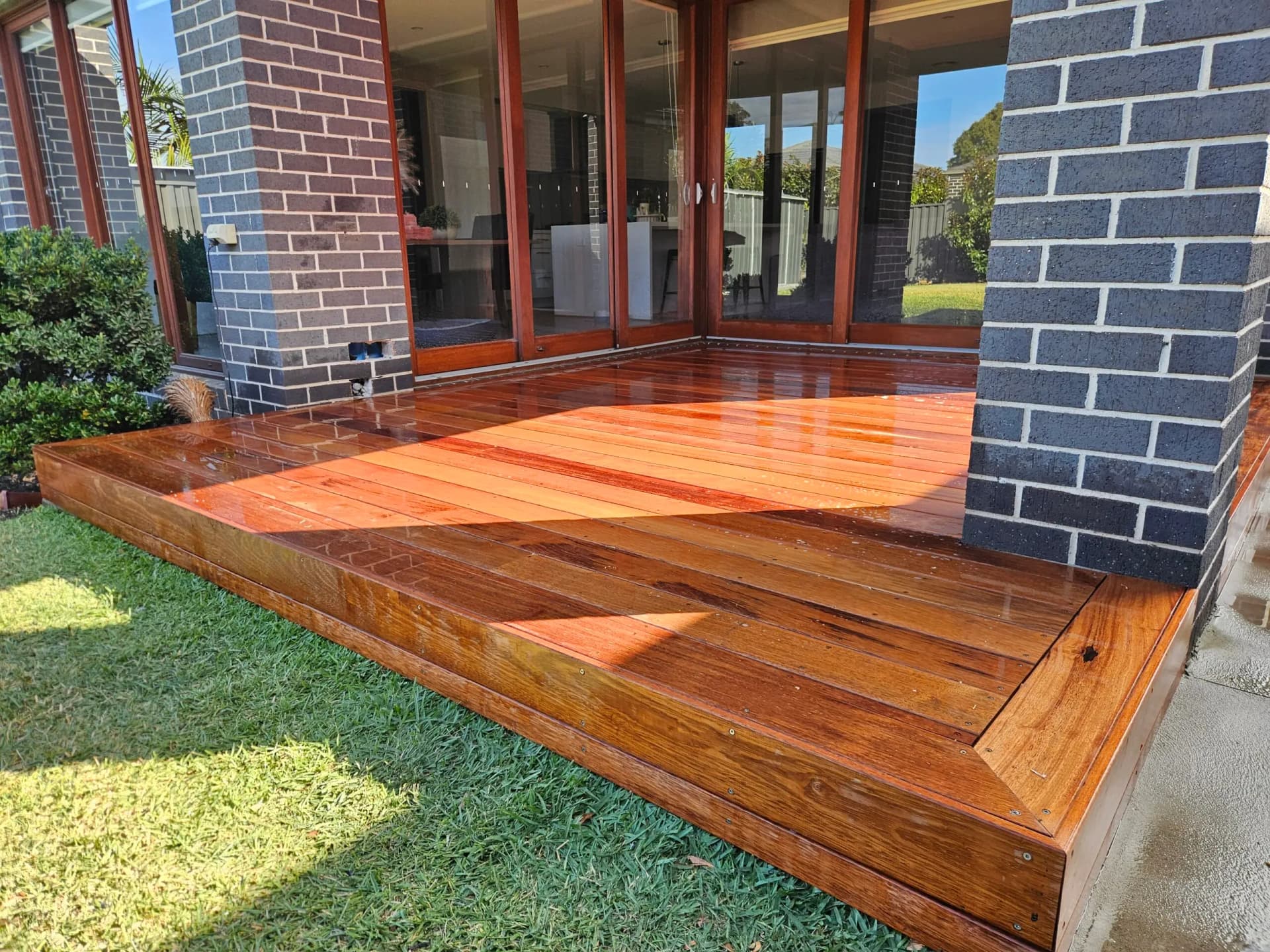
Traditional homes, homeowners who enjoy the look and feel of real timber, and those happy to maintain their deck regularly. See our Greenvale merbau deck project for an example of merbau decking done well.
Composite Decking: The Low-Maintenance Option
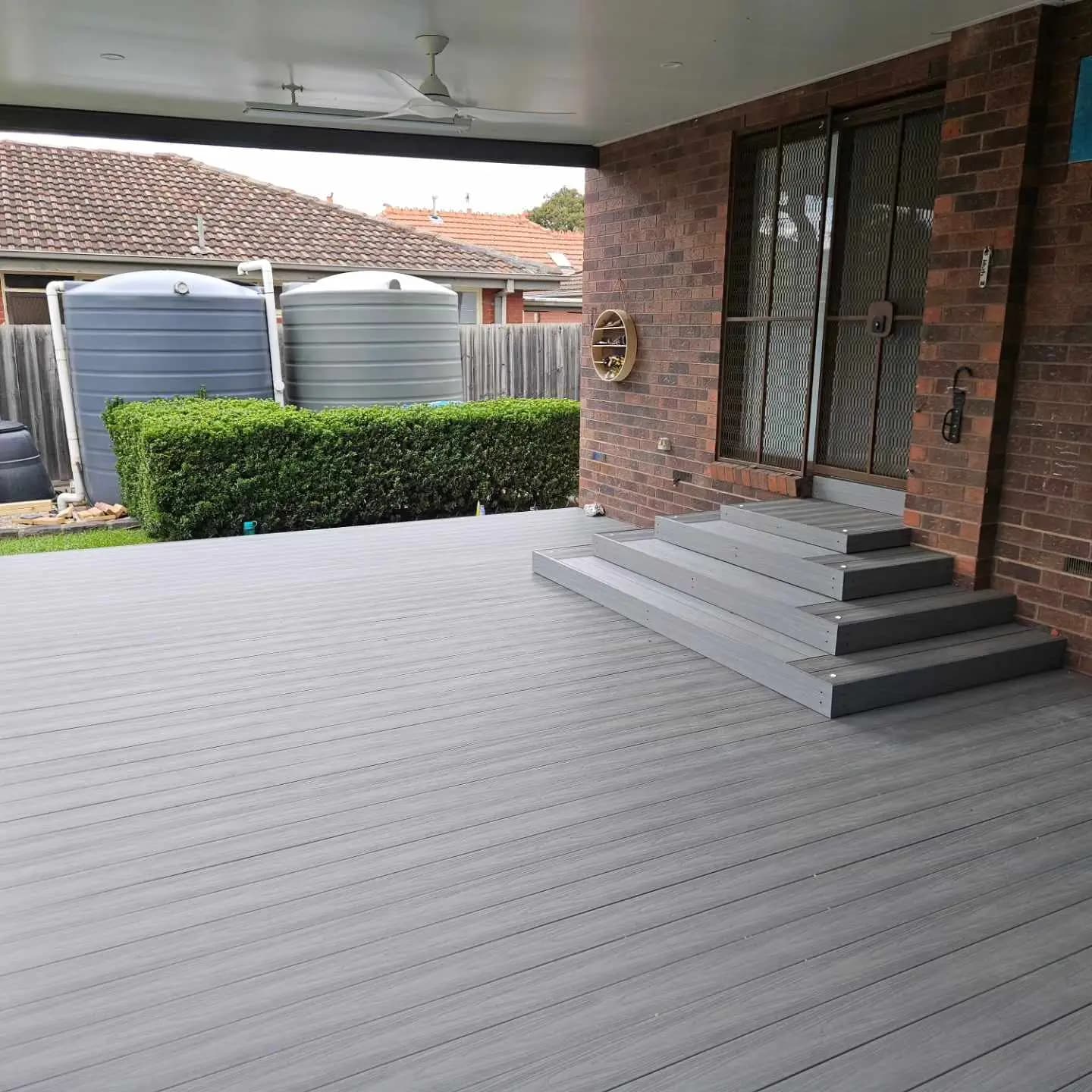
Composite decking is an engineered product made from a blend of wood fibres and plastic polymers. It has become increasingly popular in Melbourne as product quality has improved.
Pros
- Minimal maintenance — No oiling, staining, or sealing required. A periodic wash is all that's needed
- Consistent colour — Won't grey or fade the way natural timber does. Colour remains uniform over time
- No splinters — The smooth, manufactured surface is safe for bare feet and young children
- Resistant to rot and insects — The composite material doesn't attract termites or decay
Cons
- Higher upfront cost — Composite boards and concealed fastening systems are more expensive than merbau
- Can feel different underfoot — Some composite products feel less natural than real timber, particularly in cooler weather
- Heat retention — Darker composite colours can absorb and retain heat, making the surface uncomfortable on hot Melbourne summer days
- Limited repairability — Individual damaged boards can be harder to replace or match than timber
Best for
Busy families, modern homes, rental properties, and anyone who prefers a low-maintenance outdoor space. Our Brunswick composite deck project showcases a modern composite installation.
Cost Comparison
Decking costs depend on the size of the deck, subframe requirements, site access, and finishing details. Based on industry-reported ranges for Melbourne:
| Merbau | Composite | ||
|---|---|---|---|
| Supply and install | Approximately $250–$400 per sqm | Approximately $300–$500 per sqm | |
| Annual maintenance | Oiling costs + time (approximately $3–$8 per sqm per year) | Minimal (periodic wash) | |
| Expected lifespan | 25–40+ years with maintenance | 25–30+ years |
Long-term cost considerations
While merbau has a lower upfront cost, the ongoing maintenance adds up over time. Composite has a higher initial investment but virtually no maintenance costs. Over a 15–20 year period, the total cost of ownership can be similar — the difference comes down to whether you prefer to invest upfront or spread costs through regular maintenance.
“Note: These are industry-reported price ranges and will vary depending on your specific project. We provide a fixed-price quote for every deck project after a site visit.
Which Suits Melbourne's Climate?
Melbourne is known for its variable weather — strong UV in summer, heavy rain in winter, and significant temperature swings. Both materials handle these conditions, but in different ways.
UV exposure
Melbourne's UV levels are among the highest in Australia during summer. Merbau will grey without regular UV-protective oiling, while composite maintains its colour with minimal intervention. If consistent appearance matters to you, composite has an advantage here.
Rain and moisture
Both materials handle Melbourne's rainfall well. Merbau's natural density resists moisture absorption, while composite's non-porous surface sheds water effectively. Proper drainage and subframe ventilation are essential for both materials.
Temperature swings
Natural timber adapts well to temperature changes and remains comfortable underfoot across seasons. Some darker composite products can become noticeably hot in direct summer sun — lighter composite colours mitigate this.
Overall
Neither material is objectively better for Melbourne's climate. Merbau requires more active care but rewards you with natural beauty. Composite requires less effort but you trade some of the natural timber feel. The right choice depends on your lifestyle and how you plan to use your deck.
Frequently Asked Questions
Can you mix merbau and composite on the same deck?
It's uncommon and generally not recommended. The two materials have different expansion rates, fastening methods, and visual characteristics. Choose one material and commit to it for the best result.
How long does a deck take to build?
Most residential decks take 1–3 weeks to build depending on size, complexity, and site conditions. Larger or multi-level decks may take longer. We provide a detailed timeline as part of every quote.
Do I need a permit for a new deck in Melbourne?
Most new decks require a building permit in Victoria. The requirements depend on the deck height, size, and proximity to boundaries. We handle the permit process as part of every deck project. Learn more about permits on our decks and pergolas service page.
Which decking material adds more value to my home?
Both materials add value when installed well. Merbau is often perceived as a premium material by buyers due to its natural appearance. However, a well-maintained composite deck is equally attractive to buyers who value low-maintenance living. The quality of the build matters more than the material choice.
*Ready to discuss your deck project? Visit our decks and pergolas page or contact us for a free site visit and fixed-price quote.*